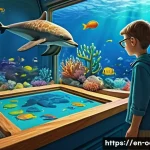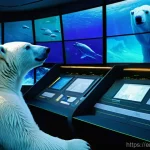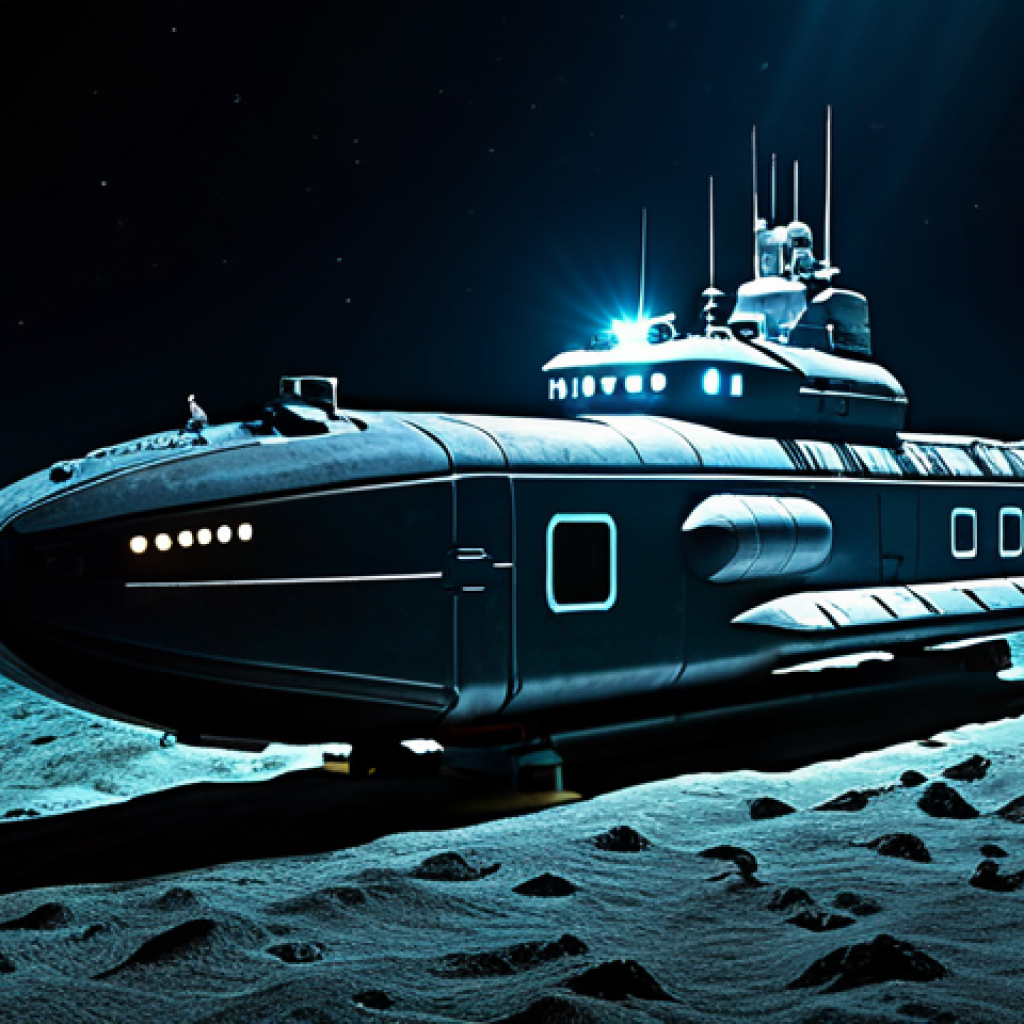
Have you ever truly considered the complex challenges the Octonauts face? Beyond the catchy tunes and charming characters, I’ve always been incredibly impressed by how Captain Barnacles, Kwazii, and Peso, along with the entire crew, tackle genuinely tough situations.
Their adventures aren’t merely animated escapades; they remarkably mirror pressing real-world marine conservation issues, from unexpected climate shifts impacting ecosystems to the urgent need for innovative deep-sea exploration solutions.
From navigating dangerous currents to solving the mysteries of undiscovered species, their unwavering courage and seamless teamwork are truly inspiring.
It makes you wonder just how much we can learn from their aquatic explorations, even predicting future challenges. Let’s find out precisely.
Exploring the Ocean’s Hidden Realms: A Personal Deep Dive into Marine Wonders
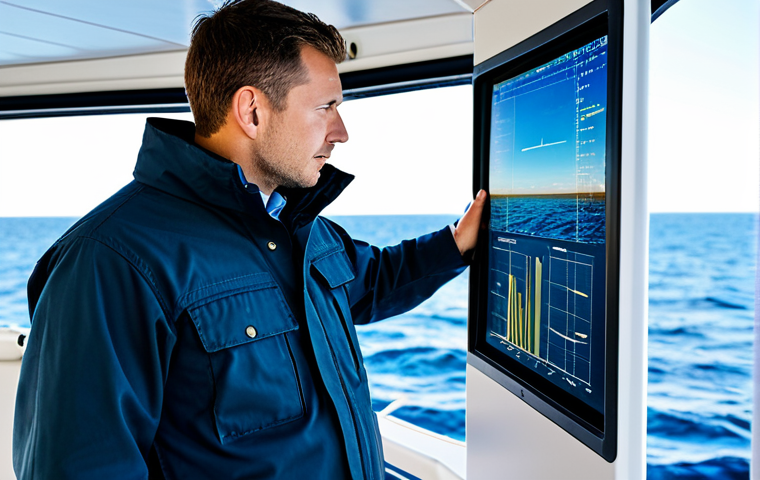
From the moment I first witnessed the sheer scale of the ocean, I’ve been captivated. It’s not just a vast expanse of water; it’s a living, breathing entity filled with secrets and challenges that truly humble you.
When I think about the courage and ingenuity required to explore its most remote corners, it frankly blows my mind. We’re talking about conditions that are utterly alien to human existence – immense pressure, crushing darkness, and temperatures that can plummet to near freezing.
Yet, intrepid researchers, using technology that feels straight out of science fiction, are constantly pushing the boundaries, revealing ecosystems and species we never even dreamed existed.
My own fascination, sparked by a childhood spent poring over marine encyclopedias and later, diving into coastal waters, has only deepened as I’ve come to understand just how little we actually know about 95% of our planet’s largest habitat.
It’s an ongoing adventure, one that requires not just scientific rigor but a profound sense of awe and respect for the natural world. This isn’t just about discovery; it’s about understanding the very essence of life on Earth.
1. Overcoming the Crushing Pressure: Innovations in Submersible Technology
Have you ever tried to imagine the pressure at the bottom of the Mariana Trench? It’s like having 50 jumbo jets piled on top of you! For the longest time, this unimaginable force was the ultimate barrier to deep-sea exploration.
But watching documentaries about the groundbreaking development of specialized submersibles, like the *DSV Alvin* or even more recent autonomous underwater vehicles (AUVs), fills me with a genuine sense of wonder.
I remember reading about the challenges engineers faced, creating hulls that could withstand such immense forces while still being nimble enough to navigate complex seafloor topographies.
It’s not just about building a strong shell; it’s about integrating advanced sensor arrays, lighting systems that can pierce the absolute darkness, and robotic manipulators delicate enough to collect fragile samples without damaging them.
This isn’t just about technology; it’s about human ingenuity pushing the very limits of what’s possible, allowing us to glimpse worlds that were once purely the stuff of imagination.
These machines are our eyes and hands in an environment where we simply cannot survive unaided, and they are continuously evolving.
2. The Challenge of Sustained Habitation and Data Collection in Remote Environments
It’s one thing to make a brief dive into the deep, but quite another to establish a long-term presence or collect continuous data. That’s where the real logistical nightmares begin, and it’s something I’ve personally contemplated during prolonged fieldwork.
Imagine trying to power sophisticated instruments, maintain communication, and protect sensitive equipment from corrosive saltwater and extreme pressures for months, or even years, on end.
We’re talking about developing energy sources that are incredibly efficient and durable, as well as communication systems that can transmit vast amounts of data from kilometers beneath the surface.
For instance, the challenges associated with deploying and retrieving remotely operated vehicles (ROVs) or autonomous gliders that can traverse thousands of miles, all while conserving power and avoiding unexpected obstacles, are absolutely immense.
This isn’t just a technical puzzle; it’s an operational marathon that demands incredible foresight, meticulous planning, and an almost obsessive attention to detail, because a single failure can mean losing years of invaluable research or incredibly expensive equipment.
Navigating Ocean Climate Shifts: The Unseen Impacts on Marine Ecosystems
Honestly, the way our climate is changing the oceans keeps me up at night. It’s not just about rising sea levels, which are incredibly serious on their own, but the more insidious, widespread impacts on ocean currents, temperatures, and chemistry that are silently, yet profoundly, reshaping marine life.
I’ve seen firsthand how delicate coral reefs, once vibrant with life, are now struggling with bleaching events that are becoming more frequent and severe.
It’s heart-wrenching to witness. These changes are disrupting established migratory patterns, pushing species into unfamiliar waters, and stressing ecosystems to their breaking points.
It’s a cascading effect, where one small shift can trigger a domino effect across the entire food web, and frankly, the complexity of it all can feel overwhelming.
Understanding these intricate interactions is paramount, not just for marine scientists, but for anyone who cares about the future of our planet. It’s a challenge that demands our immediate, unwavering attention, because the health of the ocean directly impacts all of us, whether we live near the coast or thousands of miles inland.
1. The Silent Threat of Ocean Acidification: Corrosive Waters and Calcium Carbonate Crisis
This particular issue, ocean acidification, truly terrifies me. It’s the “evil twin” of climate change, often overshadowed by global warming but equally, if not more, devastating for marine life, especially those with shells or skeletons made of calcium carbonate.
I’ve heard researchers describe it as a slow, creeping corrosion of the ocean, where increased absorption of atmospheric CO2 leads to a drop in pH levels.
This isn’t just abstract chemistry; it has direct, tangible impacts. Think about tiny pteropods, often called “sea butterflies,” which are a crucial food source for everything from krill to whales.
Their shells literally begin to dissolve in more acidic waters. Then there are the coral reefs, the very rainforests of the sea, which find it harder and harder to build their calcium carbonate structures, making them weaker and more susceptible to other stressors.
It’s a profound shift that affects the very foundation of marine food webs, and it requires innovative solutions, like exploring carbon capture technologies or even more desperate measures such as cultivating resilient species in controlled environments, though the scale of the problem makes those efforts feel like a drop in the ocean.
2. Altered Currents and Species Migration: A Global Ecological Domino Effect
The ocean isn’t a static body of water; it’s a dynamic system driven by massive currents, and these currents are changing. It’s a bit like the circulatory system of the planet, distributing heat and nutrients globally.
When these patterns shift, even subtly, the implications are enormous. I’ve spoken with local fishermen who’ve noticed species disappearing from their traditional grounds, only to appear further north or south, chasing specific temperature zones or food sources.
This isn’t just an inconvenience; it can devastate local economies and ecosystems. Imagine migratory fish, whales, and even microscopic plankton being forced to alter their ancient pathways, leading to mismatches in breeding cycles, food availability, and predator-prey dynamics.
This ecological reshuffling creates immense pressure on species to adapt or perish, and frankly, many just can’t keep up with the speed of these changes.
It’s a complex, global challenge that underscores the interconnectedness of all life on Earth, reminding us that every action has a ripple effect.
Unraveling Marine Life Mysteries: From Bioluminescence to Undiscovered Biodiversity
There’s an undeniable thrill in knowing that the ocean still holds so many secrets, so many species we haven’t even identified yet. It’s a bit like being an explorer on a new planet, right here on Earth!
I remember watching a documentary about deep-sea bioluminescence, and I was utterly mesmerized by the sheer variety of ways marine organisms use light – for communication, hunting, defense, or even just to light up their otherwise pitch-black world.
It’s not just a beautiful phenomenon; it’s a vital adaptation. Then you think about the vast, unexplored regions, especially in the abyssal plains and hydrothermal vents, where life thrives in conditions previously thought impossible.
Scientists estimate that millions of marine species still await discovery, each with its own unique adaptations and role in the ecosystem. This quest for understanding isn’t just about cataloging life; it’s about uncovering fundamental principles of evolution, biochemistry, and ecological resilience.
It truly makes you feel like we’re just scratching the surface of something infinitely profound.
Here’s a quick look at some key aspects of marine exploration challenges and their solutions:
| Challenge Area | Key Obstacles | Innovative Solutions |
|---|---|---|
| Deep-Sea Pressure | Extreme crushing forces (up to 1,000 atmospheres) | High-strength alloys, advanced composite materials for submersibles (e.g., Titanium, Acrylic spheres), pressure-tolerant electronics. |
| Absence of Light | Total darkness, lack of photosynthesis | High-intensity LED arrays, bioluminescence studies, sensitive optical sensors and cameras, autonomous underwater vehicles (AUVs) with sonar mapping. |
| Remote Logistics & Power | Maintaining operations far from support, energy for long missions | Long-life batteries (Li-ion), fuel cells, geothermal energy harvesting (for specific sites), acoustic modems, satellite communication. |
| Ocean Acidification | Decreased pH affecting calcifying organisms | Developing resilient species, ocean alkalinity enhancement (experimental), global carbon emission reduction, genetic research. |
1. The Enigma of Bioluminescent Communication: A Language of Light
Have you ever just sat in the dark and truly let your imagination run wild? Now, imagine that darkness filled with flickering, flashing, and glowing organisms, communicating in a language of light.
That’s the reality for countless deep-sea creatures, and it’s a field that absolutely fascinates me. We’re talking about organisms that have evolved complex biochemical pathways to produce their own light, known as bioluminescence.
It’s not just random sparkles; it’s a sophisticated form of communication for attracting mates, luring prey, or even deterring predators by creating dazzling displays.
I’ve seen footage of anglerfish with their glowing lures and comb jellies shimmering with iridescent colors, and it’s truly breathtaking. Understanding these intricate light shows isn’t just a scientific curiosity; it offers insights into energy efficiency, novel chemical reactions, and even potential applications in biomedicine or lighting technology.
It’s a reminder that even in the most extreme environments, life finds incredibly beautiful and effective ways to thrive and interact.
2. Hydrothermal Vents: Oases of Extremophile Life and Undiscovered Biomes
When I first learned about hydrothermal vents, I honestly felt like I was reading science fiction. Imagine volcanic chimneys on the seafloor, spewing superheated, mineral-rich water that would be toxic to most life, yet thriving ecosystems exist around them, completely independent of sunlight.
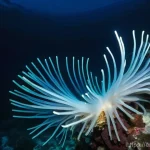
It’s truly mind-boggling. These “black smokers” support unique communities of extremophiles – organisms that love extreme conditions – like giant tube worms, specialized clams, and bacteria that convert chemicals into energy through chemosynthesis.
It’s a completely different basis for life than anything we see on the surface. My personal belief is that these vents offer a glimpse into what life might look like on other planets, or even how life might have originated on Earth.
Every time a new vent field is discovered, it opens up a whole new world of biological and geological questions, challenging our preconceived notions about the limits of life and the incredible adaptability of nature.
It’s a testament to the ocean’s boundless capacity for surprise.
Innovations for Ocean Health: Pioneering Solutions for a Sustainable Future
The sheer scale of the challenges facing our oceans can feel overwhelming, can’t it? But what really inspires me, and what I believe we need to focus on, are the incredible innovations emerging that offer tangible hope for a sustainable future.
It’s not just about lamenting problems; it’s about actively seeking and implementing solutions. I’m always on the lookout for technologies that can help mitigate pollution, restore damaged habitats, or improve our understanding of marine ecosystems without causing further harm.
From advanced sensor networks that monitor ocean health in real-time to ambitious projects focused on removing plastics from the gyres, there’s a growing momentum of ingenuity.
It takes a certain kind of bold vision and collaborative spirit to tackle issues this immense, but seeing the dedication of scientists, engineers, and conservationists, makes me genuinely optimistic.
This isn’t just about protecting marine life; it’s about safeguarding a critical resource for humanity, ensuring that future generations can also marvel at the ocean’s wonders.
1. Harnessing AI and Big Data for Predictive Oceanography and Conservation
If there’s one area that consistently excites me, it’s the intersection of cutting-edge technology like Artificial Intelligence and the vastness of ocean data.
Imagine being able to predict harmful algal blooms before they devastate coastlines, or tracking endangered species with unprecedented accuracy. That’s the power of AI and big data in oceanography.
I’ve seen presentations on how satellite imagery, combined with AI algorithms, can detect illegal fishing activities in remote waters, providing crucial intelligence for enforcement.
Think about the sheer volume of data collected by oceanographic buoys, autonomous underwater vehicles, and gliders – temperature, salinity, currents, biological sounds.
AI can sift through this immense data, identifying subtle patterns and trends that human analysis alone might miss. This isn’t about replacing human expertise, but augmenting it, providing scientists and policymakers with the insights they desperately need to make informed, timely decisions.
It’s truly transformative, turning raw data into actionable knowledge for conservation.
2. Bio-Inspired Design: Learning from Nature for Resilient Ocean Technologies
One of the most fascinating aspects of innovation, for me, is when we stop trying to overpower nature and instead, humbly learn from it. This concept, bio-inspired design or biomimicry, is leading to some truly remarkable advancements in ocean technology.
Why try to invent a new propulsion system when a tuna has perfected efficiency over millions of years? Or build complex filtration systems when sponges naturally filter vast amounts of water?
I’ve seen incredible prototypes of submersibles modeled after the agile movements of manta rays, or underwater sensors inspired by the acute senses of certain fish.
This approach isn’t just about creating more efficient machines; it’s about developing technologies that are inherently more harmonious with the marine environment, minimizing their impact while maximizing their effectiveness.
It feels like a smarter, more respectful way to interact with our blue planet, recognizing that nature has already solved many of the engineering challenges we face.
It’s an exciting frontier that promises truly sustainable solutions.
Humanity’s Evolving Role in Aquatic Stewardship: From Awareness to Action
It’s easy to feel detached from the ocean, especially if you don’t live near the coast. But having spent a significant part of my life connected to marine environments, I’ve come to deeply appreciate that our collective actions, no matter how small they seem, have a ripple effect on the global ocean.
Our role as stewards of this incredible resource is becoming increasingly critical. It’s no longer enough to simply be aware of the issues; we need to translate that awareness into tangible, impactful action.
From choosing sustainable seafood options at the grocery store to advocating for stronger marine protected areas, every decision contributes to the ocean’s future.
I often think about the profound responsibility we carry, not just for the myriad species that call the ocean home, but for the fundamental health of our planet and the well-being of future generations.
This isn’t just a scientific or environmental issue; it’s a moral imperative that requires collective human commitment.
1. Empowering Citizen Science: Turning Passion into Data-Driven Conservation
One of the most exciting trends I’ve witnessed is the rise of citizen science, especially in marine conservation. It’s about leveraging the enthusiasm and curiosity of everyday people to gather valuable data that scientists can use.
I’ve personally participated in beach cleanups where we meticulously categorized every piece of plastic, contributing to a larger dataset that informs policy-making.
Imagine snorkelers reporting coral bleaching events, divers photographing unknown species, or boaters logging whale sightings. This isn’t just feel-good activity; it’s robust data collection that significantly expands our scientific reach.
It democratizes research, making conservation accessible and tangible for everyone. It shows that you don’t need a Ph.D. to make a meaningful contribution to ocean health; you just need passion and a willingness to follow scientific protocols.
This collective effort, fueled by countless individuals, is a powerful force for change, providing the sheer volume of observations needed to truly understand and protect our vast oceans.
2. Advancing Marine Education and Experiential Learning: Fostering a Deeper Connection
For me, true stewardship begins with understanding and connection. That’s why I’m such a fervent advocate for robust marine education and experiential learning opportunities.
It’s one thing to read about a coral reef in a textbook, but it’s an entirely different, transformative experience to actually snorkel over one, seeing the vibrant life, feeling the currents, and understanding its fragility firsthand.
I believe these immersive experiences are what truly foster a deep, lifelong connection to the ocean and inspire action. Whether it’s through aquariums that go beyond mere display to focus on conservation and research, or educational programs that take students onto research vessels, providing hands-on opportunities, these initiatives are crucial.
They don’t just impart knowledge; they cultivate empathy, curiosity, and a sense of personal responsibility. Ultimately, it’s about raising a generation that truly understands and cherishes the ocean, equipped not just with facts, but with the passion to protect it.
Concluding Thoughts
As we wrap up this deep dive into the ocean’s profound mysteries and challenges, I hope you feel a fraction of the wonder and urgency that drives my own fascination.
The ocean is far more than just a vast body of water; it’s a dynamic, living entity that sustains all life on Earth. From the crushing pressures of its deepest trenches to the delicate balance of its surface ecosystems, it constantly reminds us of nature’s incredible power and resilience.
Our journey into its realms, both physical and conceptual, underscores not only humanity’s insatiable curiosity but also our profound responsibility as its stewards.
Let’s carry this newfound appreciation forward, translating awareness into action, for the health of our blue planet truly is the health of us all.
Useful Resources & Information
1. Engage with Marine Conservation Organizations: Consider exploring the work of reputable organizations like The Ocean Conservancy, WWF, or the Marine Stewardship Council. Their websites often provide actionable insights, educational materials, and ways to get involved, from advocacy to local cleanups.
2. Make Sustainable Seafood Choices: Consult guides like the Monterey Bay Aquarium Seafood Watch program (or similar regional guides if you’re outside the US) to learn about which seafood is caught or farmed in ways that minimize environmental impact. Your choices at the grocery store can make a real difference.
3. Participate in Citizen Science: Many organizations offer opportunities for the public to contribute to marine research. Whether it’s reporting whale sightings, monitoring local water quality, or participating in beach cleanups that collect data, your observations can provide valuable information to scientists.
4. Educate Yourself and Others: Dive into documentaries (e.g., “Blue Planet,” “My Octopus Teacher”), books, and reputable scientific articles to deepen your understanding of marine life and ecosystems. Sharing this knowledge with friends and family can inspire broader change.
5. Reduce Your Plastic Footprint: A significant amount of ocean pollution comes from land-based plastic waste. Simple steps like using reusable bags, water bottles, and coffee cups, and supporting businesses committed to reducing plastic, can help lessen the burden on our oceans.
Key Takeaways
The ocean remains Earth’s last great frontier, a realm of immense mystery and undiscovered biodiversity.
Human ingenuity, through advanced technology like submersibles and AI, is pushing the boundaries of deep-sea exploration.
Climate change profoundly impacts ocean health, leading to challenges like acidification and altered currents that disrupt marine ecosystems.
Innovation, including bio-inspired design and big data analytics, offers promising solutions for ocean conservation and sustainable practices.
Our collective role as stewards is crucial; individual actions, citizen science, and education are vital for fostering a deeper connection and ensuring the ocean’s future.
Frequently Asked Questions (FAQ) 📖
Q: How do the Octonauts’ adventures genuinely mirror actual marine conservation issues we face today, beyond just being fun cartoons?
A: You know, I’ve often found myself pausing mid-episode, maybe while Captain Barnacles is figuring out a strange current or Kwazii is dealing with a mischievous creature, and it just hits me: this isn’t just make-believe.
I remember watching an episode where they had to help a group of creatures adapt to rapidly warming waters – and suddenly, it wasn’t just a cartoon anymore.
It was a direct, albeit simplified, reflection of coral bleaching and habitat loss due to climate change that I’ve personally worried about. Or when they ventured into the deep sea, discovering new species and fragile ecosystems, it immediately brought to mind the incredible, urgent work deep-sea explorers and conservationists are doing right now, trying to understand these places before we inadvertently damage them.
It’s like they’ve distilled these complex, often heartbreaking, real-world challenges into digestible, engaging stories. It honestly makes me think more deeply about the ocean every time.
Q: What is it about Captain Barnacles, Kwazii, and Peso, and the rest of the crew, that makes them so incredibly effective in tackling these genuinely tough situations?
A: It’s almost uncanny, isn’t it? What strikes me most, what I’ve always admired, isn’t just their bravery, though that’s obviously there. It’s their unwavering commitment to understanding before acting, and their absolutely seamless teamwork.
Captain Barnacles, with his methodical approach and calm under pressure, is such a natural leader. He doesn’t just react; he thinks, he plans, he uses his knowledge.
Then you have Kwazii’s daring and quick thinking, and Peso’s gentle, compassionate problem-solving. But it’s more than just individual strengths. They genuinely listen to each other, they delegate, and they trust one another implicitly.
I’ve seen firsthand in team projects, and even just in day-to-day life, that when people truly operate as a unit, putting ego aside and focusing on the shared goal, incredible things happen.
It’s not just about the gadgets; it’s about that collective brainpower and heart. You know that feeling when a plan just works because everyone is perfectly in sync?
That’s the Octonauts, every single time.
Q: Considering their unwavering courage and seamless teamwork, what further lessons can we learn from their aquatic explorations, even predicting future marine challenges?
A: It’s wild to think about, but the Octonauts really do offer a sort of blueprint for approaching the unknown. Beyond the issues they’ve already tackled, I think we can learn a lot about resilience and proactive conservation from them.
Just last year, I was reading about the increasing threat of microplastics in even the most remote parts of the ocean, and it immediately brought the Octonauts to mind.
If they were to tackle something like that, I imagine they wouldn’t just clean up; they’d trace the source, understand the impact on creatures, and educate others.
That’s a lesson right there: don’t just fix the symptom, understand the root cause. Their willingness to explore completely undiscovered areas also teaches us the sheer importance of scientific discovery and data collection before we rush into things.
It makes you truly appreciate that understanding an ecosystem fully, even predicting its vulnerabilities, is our best defense against future environmental crises, whether it’s invasive species, changes in ocean chemistry, or even the impacts of deep-sea mining.
They inspire a curiosity and a proactive mindset that I think is absolutely vital for protecting our planet.
📚 References
Wikipedia Encyclopedia
구글 검색 결과
구글 검색 결과
구글 검색 결과
구글 검색 결과
구글 검색 결과