Who else remembers spending countless hours glued to the screen, watching the Octonauts zip through the ocean in their GUPs, solving every underwater mystery with a smile?
I definitely do! Those colorful adventures and daring rescues always made me feel like the deep sea was just a playground, full of friendly creatures and easily fixable problems.
But as I’ve gotten older and learned more about our incredible planet, I started wondering: how close do Captain Barnacles and his crew actually come to the thrilling, often perilous, reality faced by our world’s most dedicated deep-sea explorers and scientists?
It’s a thought that truly captivated me, making me curious about the fascinating parallels and stark differences between animated fantasy and the real challenges of marine exploration today.
Let’s dive in and uncover the amazing truth together.
Diving into the Abyss: Beyond a GUP’s Gentle Glide
The Ocean’s True Depths: A World Untouched
Oh, how I remember the Octonauts easily cruising through vibrant coral reefs and past friendly whales! It always seemed like a leisurely Sunday drive, albeit underwater.
But let me tell you, from what I’ve learned, real deep-sea exploration is anything but a casual paddle. When we talk about “the deep sea,” we’re not just talking about a slightly deeper part of the ocean; we’re talking about crushing pressures that could flatten a car, temperatures that hover just above freezing, and an almost absolute absence of light.
It’s a realm far more alien than anything we can imagine on land, a place where survival itself is a miracle. I used to think the GUPs, with their cheerful lights, could just zip anywhere.
The reality, though, is that getting even a human-occupied submersible down to the Mariana Trench, the deepest part of our ocean, is an engineering marvel that pushes the limits of human ingenuity.
It’s a painstaking process, requiring years of planning, millions of dollars, and an incredible amount of courage from the individuals who dare to descend into such an unforgiving environment.
It really puts those GUP rides into perspective, doesn’t it? It’s a true test of technology and human spirit.
Navigating the Vast Unknown: Precision Over Whimsy
In the world of the Octonauts, Captain Barnacles always seemed to know exactly where he was going, or at least had a pretty good idea, even when a new mystery arose.
A quick map check on the dashboard, and off they’d go! My own experience with navigation usually involves shouting at my GPS, so I always admired their efficiency.
But in real deep-sea exploration, navigation is a whole different beast. Imagine trying to find a specific, tiny hydrothermal vent field on the ocean floor, miles beneath the surface, with no landmarks and pitch black conditions.
It’s not just about getting there; it’s about getting there precisely, often within a few meters of a target site, to deploy sensitive equipment or collect samples.
Researchers rely on incredibly sophisticated acoustic positioning systems, transponders, and highly accurate inertial navigation systems, sometimes combining them with detailed seafloor maps generated by multibeam sonars.
It’s an intricate dance of technology and expertise, far removed from a whimsical joyride. The precision required is astounding, and even a tiny miscalculation can mean missing a rare discovery or losing valuable equipment.
It truly makes me appreciate the hidden complexities behind every successful dive.
The Real Heroes of the Deep: More Than Just a Captain
The Diverse Crew: Brains, Brawn, and Unsung Efforts
Growing up, I always saw Captain Barnacles as the undisputed leader, steering the ship and making all the tough calls. And Peso was always there, ready with a bandage!
It seemed pretty straightforward. But I’ve learned that the reality of a deep-sea exploration team is far more intricate and specialized. It’s not just a small, multi-talented crew handling everything.
Instead, you have a vast array of experts, each with years of dedicated training. Think about it: oceanographers specializing in currents, marine biologists focused on specific ecosystems, geologists studying seafloor formations, microbiologists looking for extreme life forms, and crucially, engineers and technicians who maintain the submersibles and scientific instruments.
Each person is a vital cog in a massive machine, contributing their unique knowledge to the mission. There’s a chief scientist, of course, but their role is often more about overseeing and coordinating rather than directly operating the vehicle or performing every task.
It’s a testament to human collaboration, where complex challenges are tackled by a multitude of brilliant minds working in concert.
Behind the Scenes: Support Systems and Shore Teams
What we didn’t see in the Octonauts was the immense infrastructure and team working tirelessly *above* the surface. They’d just pop up, and their mission was complete.
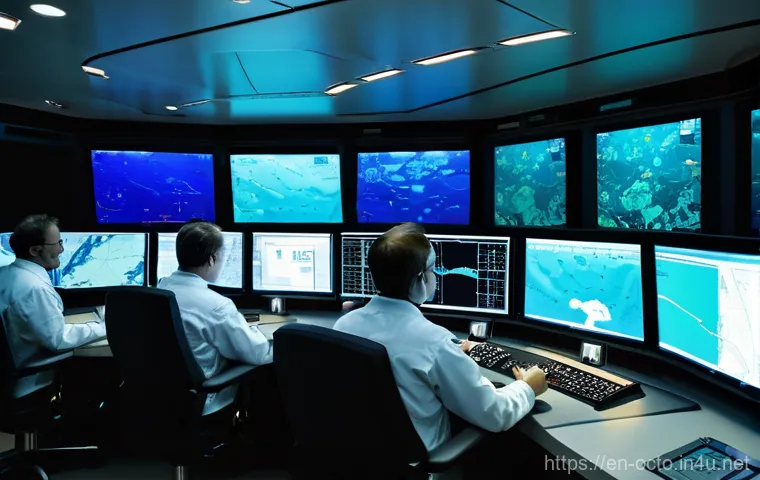
But for real expeditions, the success of a deep-sea dive often hinges on the support systems on the surface vessel, and even on shore. Imagine a large research vessel, a floating city, complete with laboratories, data processing centers, and sleeping quarters for dozens of scientists and crew.
There are engineers continuously monitoring the submersible’s systems, remotely operated vehicles (ROVs) being prepared for deployment, and dedicated navigation and communications teams keeping track of everything.
And beyond the ship, there are entire institutions and grant-funding bodies that make these missions possible, providing the initial research, funding, and logistical support.
My own little home office can feel like mission control sometimes, but it’s nothing compared to the intricate network of professionals ensuring a deep-sea mission runs smoothly.
It’s a powerful reminder that behind every daring dive is a vast, interconnected web of human effort and dedication, far beyond what any single cartoon crew could represent.
Gadgets and Gizmos: Science vs. Animated Fantasies
From GUP-X to Alvin: Engineering Realities
Who could forget the incredible GUPs? The GUP-X could turn into an airplane *and* a tank! It was pure childhood magic, making every problem seem solvable with a quick transformation.
As an adult, seeing the incredible real-world submersibles like the DSV Alvin or the ROV Jason, my appreciation has shifted from whimsical fantasy to awe-inspiring engineering.
These aren’t just vehicles; they are self-contained ecosystems designed to withstand unimaginable pressures and perform incredibly delicate tasks. Alvin, for example, has a titanium sphere to protect its three-person crew and is packed with manipulator arms that can collect fragile samples or deploy instruments with surprising dexterity.
Unlike a GUP, these submersibles don’t just transform; they are meticulously crafted for specific scientific objectives, often requiring months or even years of fabrication and testing.
They are rugged, purpose-built machines, each bolt and wire precisely placed to ensure mission success and, most importantly, human safety. It makes my own attempts at DIY feel absolutely trivial!
The Power of Sensors: Seeing What Our Eyes Cannot
In the Octonauts, the crew often relied on their eyes and simple tools to observe marine life. A magnifying glass, maybe a small net – it was charmingly low-tech.
My own attempts at observing nature usually involve a pair of binoculars and a lot of patience. But the deep sea is a dark, cold, and often murky place, making direct human observation nearly impossible for extended periods.
That’s where the truly incredible array of scientific sensors comes in. Real deep-sea explorers don’t just “look”; they measure, record, and analyze. We’re talking about high-definition cameras that can capture life in the dark, sophisticated chemical sensors that detect hydrothermal vent fluids, sonar systems that map the seafloor in stunning detail, and temperature probes that measure minute changes.
These sensors collect vast amounts of data that allow scientists to understand the complex physical, chemical, and biological processes occurring miles beneath the waves.
It’s like having superhuman senses, extending our reach into a world that would otherwise remain completely hidden. This level of technological sophistication is a far cry from a simple GUP camera, showing just how dedicated we are to truly understanding this hidden realm.
Creature Features: From Friendly Faces to Unseen Wonders
Encountering Life in the Extreme: Beyond Cute and Cuddly
Barnacles and the crew always seemed to meet marine creatures that were, for the most part, friendly or just misunderstood. Even the biggest kraken turned out to be a gentle giant!
It was a lovely, comforting thought. My own encounters with wildlife are usually limited to squirrels and pigeons, so I’ve always admired their fearlessness.
However, the deep sea is home to some of the most bizarre, alien, and utterly captivating forms of life on Earth, many of which would make even the bravest Octonaut pause.
These creatures have evolved incredible adaptations to survive in the extreme conditions of the abyss. We’re talking about fish that glow in the dark with their own built-in light, worms that thrive around super-hot volcanic vents, and squids with eyes bigger than dinner plates to catch the faintest glimmer of light.
Many of these organisms are still unknown to science, and each dive brings the potential for discovering entirely new species that challenge our understanding of life itself.
It’s less about friendly chats and more about meticulous observation and careful collection to understand these truly unique inhabitants. It’s a stark reminder that the ocean holds secrets we are only just beginning to unravel.
The Diversity Divide: Known Friends vs. Hidden Ecosystems
The Octonauts introduced us to a charming, albeit limited, cast of marine characters. We knew the whales, the sea turtles, the occasional giant squid.
It was a familiar and reassuring world. But the true deep sea boasts an astonishing level of biodiversity, much of which remains entirely undiscovered.
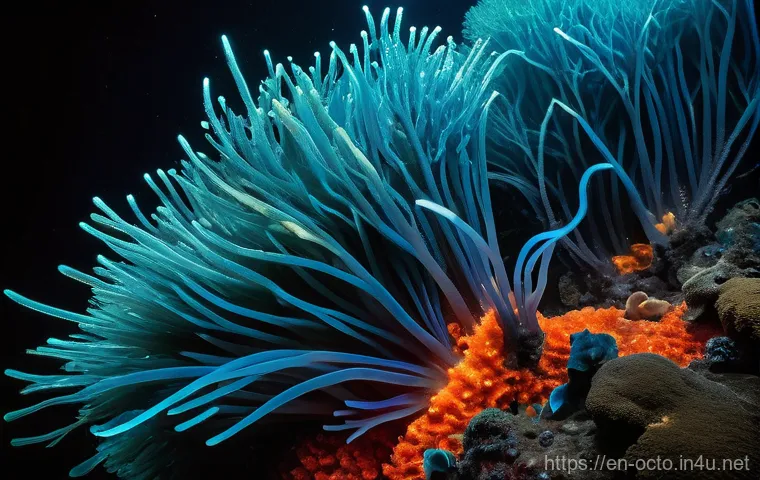
Researchers are not just looking for individual animals; they are mapping out entire ecosystems thriving in places we once thought impossible, like around hydrothermal vents or cold seeps, powered not by the sun, but by chemical energy.
These are worlds within worlds, full of unique food webs and interdependencies. For example, some vent communities are teeming with giant tube worms, specialized clams, and unique species of shrimp, all coexisting in conditions that would be toxic to most other life forms.
Every deep-sea expedition is a journey into uncharted biological territory, with the potential to rewrite textbooks on evolution and ecology. It’s a constant discovery of new life forms and new ways that life finds a way, pushing the boundaries of what we thought was possible.
Environmental Stewardship: A Deeper Commitment
Protecting the Deep: More Than Just a Quick Rescue
In the world of the Octonauts, environmental problems were usually resolved with a timely rescue or a clever invention. A tangle of kelp, a lost creature – easily fixed!
It painted a lovely picture of simple solutions. But the reality of deep-sea environmental protection is far more complex, urgent, and often requires long-term, global collaboration.
We’re facing monumental challenges like climate change impacting ocean currents and temperatures, plastic pollution sinking to the deepest trenches, and the looming threat of deep-sea mining.
Real deep-sea scientists aren’t just rescuing individuals; they are working to understand and mitigate these massive, systemic threats to entire ecosystems.
They collect data on ocean acidification, monitor the spread of microplastics, and study the impacts of human activities to inform policy and promote sustainable practices.
It’s a far cry from a single heroic act; it’s a continuous, often uphill battle fought by dedicated researchers and conservationists worldwide. Their work is a vital frontline in protecting the health of our entire planet, making me think more deeply about my own daily choices and their broader impact.
Ethical Exploration: A Gentle Touch on Fragile Worlds
The Octonauts always operated with the best intentions, but their interactions, while always helpful, could sometimes be a bit… hands-on. In real deep-sea exploration, the utmost care and ethical considerations are paramount, especially when exploring fragile and often unknown environments.
Scientists understand that every interaction has the potential to disturb a delicate ecosystem. This means rigorous protocols for sample collection, minimizing light exposure, and ensuring that submersibles and ROVs operate with the gentlest touch possible.
The goal is to observe, learn, and understand without causing irreversible harm. There are international guidelines and regulations governing deep-sea research, emphasizing responsible conduct and the sharing of scientific data for the benefit of all.
It’s about being a respectful guest in a truly alien world, acknowledging our responsibility to preserve these unique habitats for future generations.
This careful, conscientious approach is a cornerstone of modern deep-sea science, recognizing that some of these environments may never recover from careless human intervention.
Facing the Unknown: Dangers and Discoveries
The Perils Below: Risk and Resilience
The Octonauts faced exciting challenges, but genuine peril was rarely a long-term threat. A runaway GUP, a stuck creature – all resolved quite neatly.
My childhood self never really grasped the actual risks involved in going deep into the ocean. Real deep-sea exploration, however, is inherently dangerous.
We’re talking about incredibly high pressures, equipment malfunctions in remote locations, and the very real possibility of being cut off from the surface.
Submersible pilots and crews undergo extensive training to prepare for emergencies, from power failures to communication blackouts. Every dive is meticulously planned, with backup systems, emergency protocols, and rigorous safety checks.
There’s a palpable sense of courage and resilience in those who undertake these missions, knowing they are pushing the boundaries of what’s possible in one of Earth’s most unforgiving environments.
It’s a job for those with nerves of steel and an unwavering commitment to both science and safety. It really makes you appreciate the bravery of these modern-day explorers.
Unveiling Secrets: The Thrill of First Discoveries
While the Octonauts made “discoveries” with every episode, finding a new creature or a hidden cave, the actual thrill of making a truly new scientific discovery in the deep sea is on another level entirely.
Imagine being the first human eyes to witness a creature that has never been seen before, or to find a thriving ecosystem powered by volcanic vents, fundamentally changing our understanding of life on Earth.
That’s the reality for deep-sea explorers. These discoveries aren’t just exciting; they can be paradigm-shifting, revealing entirely new branches on the tree of life or providing insights into the origins of life itself.
The moments when scientists see something truly unprecedented on their monitors, far below the waves, must be incredibly exhilarating. It’s the ultimate payoff for all the risks, the years of study, and the immense effort.
This search for the unknown is what truly drives many of these remarkable individuals, pushing them to explore deeper and learn more about our incredible planet.
Funding the Voyage: The Cost of True Exploration
The Price Tag of Discovery: Billions, Not Just a Budget
The Octonauts never seemed to worry about funding their adventures; the GUPs were always fueled, and the Octopod was always maintained. It was a utopian vision of endless resources.
But in the real world, deep-sea exploration is incredibly expensive, requiring significant financial investment from governments, research institutions, and sometimes private philanthropists.
Think about the costs: designing and building a state-of-the-art research vessel can run into hundreds of millions of dollars. Submersibles like Alvin cost tens of millions to build and maintain, and each deep-sea expedition can cost millions more, covering fuel, crew salaries, specialized equipment, and data analysis.
These are not small change operations; they are massive undertakings requiring substantial, sustained funding. It’s a stark reminder that scientific advancement, especially in such challenging environments, doesn’t come cheap.
It highlights the importance of public and private investment in science, recognizing that the long-term benefits of understanding our planet far outweigh the initial costs.
Securing Support: Grants, Partnerships, and Global Vision
Unlike the Octonauts who seemed to operate independently, real deep-sea exploration relies heavily on a complex web of grants, partnerships, and international collaborations.
Scientists spend countless hours writing grant proposals, competing for limited funds from organizations like the National Science Foundation (NSF) or European research councils.
They also form partnerships with other universities, government agencies, and even private companies to share resources and expertise. Often, the most ambitious expeditions are international collaborations, pooling talent and funding from multiple countries to tackle shared scientific goals.
My own experience with pitching ideas for blog posts feels like a mini-version of this, but on a truly massive scale. It’s a testament to the collaborative spirit of science, where the desire to understand our world transcends borders and institutions.
This intricate process of securing support is a fundamental, albeit often unseen, part of bringing deep-sea discoveries to light.
| Aspect | The Octonauts’ World | Real Deep-Sea Exploration |
|---|---|---|
| Vehicle Complexity | Multi-functional GUPs, often transforming quickly and easily into various modes (e.g., GUP-X as tank/plane). Simple controls, bright lights. | Specialized submersibles (e.g., DSV Alvin, ROVs), designed for specific scientific tasks. Robust engineering, advanced life support, complex manipulator arms. |
| Crew Composition | Small, multi-talented core crew (Captain, Medic, Scientist, Engineer, etc.) handling most tasks. | Large, multidisciplinary teams including oceanographers, biologists, geologists, microbiologists, engineers, pilots, and ship crew. |
| Environmental Threats | Often individual animal distress or minor localized issues (e.g., kelp entanglement), easily resolved with a quick rescue. | Global issues like climate change impacts, ocean acidification, plastic pollution, deep-sea mining, requiring long-term scientific study and policy changes. |
| Creature Encounters | Mainly friendly, often anthropomorphic creatures. New species are usually quickly identified and understood. | Diverse, often bizarre and alien-looking life forms, many unknown to science. Focus on careful observation and collection for scientific study. |
| Navigation | Simple map checks, intuitive sense of direction, easy re-routing for immediate problems. | Highly sophisticated acoustic positioning, transponders, inertial navigation systems for precise location tracking in featureless dark environments. |
Wrapping Things Up
Whew! It’s been quite a journey comparing the delightful world of the Octonauts with the truly awe-inspiring, yet incredibly challenging, reality of deep-sea exploration, hasn’t it? As much as I adore Captain Barnacles and his crew, diving into the nitty-gritty details of real scientific endeavors makes you truly appreciate the sheer brilliance, grit, and dedication of the people who venture into our planet’s final frontier. It’s a powerful reminder that while imagination sparks wonder, human ingenuity and relentless curiosity are what truly unlock the ocean’s deepest secrets. Every dive is a testament to our insatiable desire to understand the world around us, no matter how alien or unforgiving it may seem.
Thinking about the incredible technology and the sheer courage it takes, it’s humbling. My own attempts at navigating a new city feel trivial compared to pinpointing a hydrothermal vent miles beneath the surface. This deep dive into the abyss has certainly given me a new perspective, and I hope it’s done the same for you. It’s not just about what’s out there, but about the amazing human spirit driving us to find it.
Handy Tips for the Ocean Enthusiast
1. Dive into Documentaries: If our little deep-sea journey has piqued your interest, I highly recommend watching some incredible documentaries like “Blue Planet II” or “Planet Earth: The Deep Sea.” They offer breathtaking, real-life footage and insights into the creatures and ecosystems we’ve discussed. Seeing is believing, and these shows truly bring the abyss to life in a way cartoons simply can’t. You’ll be absolutely mesmerized by the sheer diversity and resilience of life that thrives under immense pressure, and I guarantee you’ll find yourself marveling at the sheer beauty and strangeness of it all. It’s a fantastic way to spend an evening!
2. Support Ocean Conservation: Our deep oceans are facing unprecedented threats from pollution, climate change, and human activities. Consider supporting reputable organizations like the Monterey Bay Aquarium Research Institute (MBARI) or the Ocean Conservancy. Even small donations or simply spreading awareness can make a huge difference in protecting these fragile, unexplored worlds for future generations. Their work is vital, and every little bit truly helps to safeguard these precious environments, ensuring that the mysteries of the deep can continue to be explored and protected for generations to come.
3. Visit an Aquarium or Science Museum: There’s nothing quite like seeing deep-sea exhibits up close to grasp the scale and strangeness of these environments. Many major aquariums have dedicated sections on deep-sea life, often featuring incredible adaptations like bioluminescence. It’s a fantastic way to engage with marine science hands-on and learn more about the challenges of deep-sea research. I always find a renewed sense of wonder after a visit, feeling like I’ve had a tiny glimpse into an alien world right here on Earth!
4. Explore Citizen Science Projects: Want to get involved? Many marine research institutions offer citizen science programs where you can help classify underwater photos, identify species, or contribute to data collection from the comfort of your home. It’s a unique opportunity to contribute to real scientific discoveries and deepen your understanding of marine biology. You might even be the first to spot something truly unique or help scientists uncover new patterns in marine life distribution, which, let’s be honest, is pretty cool!
5. Educate Yourself and Others: One of the most impactful things we can do is simply to learn more about our oceans and share that knowledge. The more people understand the critical role the deep sea plays in our global ecosystem and the threats it faces, the more likely we are to inspire action. So, keep reading blogs like this one, follow marine scientists on social media, and chat about these wonders with your friends and family! Your voice can be a powerful tool for ocean advocacy.
Key Takeaways from Our Deep Dive
So, what’s the big picture here? For me, it boils down to this: while animated shows like the Octonauts beautifully ignite our imagination and love for the ocean, the actual realm of deep-sea exploration is a whole different beast—a testament to human genius, resilience, and an unquenchable thirst for knowledge. It’s a world where specialized engineering, multidisciplinary teams, and cutting-edge technology are paramount, far surpassing simple cartoon gadgets. The creatures we find are often stranger and more wondrous than anything we could dream up, pushing the boundaries of what we thought life could be. Most importantly, real exploration comes with immense risks, requiring meticulous planning and ethical considerations to protect these fragile, largely unknown ecosystems. It also demands significant investment and global collaboration, highlighting the immense value we place on understanding our planet’s last great frontier. Every discovery isn’t just exciting; it’s a step towards safeguarding the health of our entire blue planet, and I truly believe that’s a mission worth supporting.
Frequently Asked Questions (FAQ) 📖
Q: So, are there real-life “GUPs” that deep-sea explorers use? How do they actually get around down there?
A: Oh, this is such a fantastic question, and it’s one I absolutely love diving into! When I first started pondering the Octonauts’ GUPs, I pictured something sleek and speedy, zipping through the water with ease.
And while real-life deep-sea submersibles are undeniably incredible feats of engineering, they’re often a far cry from the cute, animal-inspired vehicles we see on screen.
Think less “Guppy” and more “highly specialized, incredibly tough scientific marvel.” From my own research and what I’ve seen, real explorers rely on a variety of submersibles and remotely operated vehicles (ROVs) to navigate the crushing pressures of the deep.
Manned submersibles, like the famous Alvin, allow a small crew to descend thousands of meters, giving them a firsthand look at the alien landscapes below.
But more and more, we’re seeing ROVs and autonomous underwater vehicles (AUVs) take center stage. These unmanned robots can spend longer periods at extreme depths, carrying cameras, sensors, and robotic arms to collect samples and data where humans simply can’t go.
It’s truly mind-boggling how sophisticated these machines are, designed to withstand pressures that could crush a car, and built to operate in total darkness, miles from the surface.
It’s not quite as colorful as the GUPs, but the science behind them is infinitely more thrilling, wouldn’t you agree?
Q: Do real deep-sea explorers actually encounter as many diverse and unique creatures as the Octonauts do?
A: This is where the fantasy of the Octonauts truly sparks our imagination, isn’t it? That incredible parade of bizarre and beautiful creatures, from colossal squids to adorable sea pigs!
And you know what? The real deep ocean, surprisingly, gives Octonauts a run for their money! When I first learned about hydrothermal vents and cold seeps, my jaw practically hit the floor.
These incredibly unique ecosystems are teeming with life that thrives without sunlight, using chemosynthesis instead. We’re talking about giant tube worms, bizarre “yeti crabs,” and all sorts of otherworldly organisms that look like they stepped right out of a sci-fi movie.
While you might not bump into a friendly sea otter needing rescue every five minutes, the diversity down there is absolutely astonishing, and often, completely new to science!
I remember seeing footage of a jellyfish so iridescent it looked like a rainbow in the darkness – it truly felt like discovering a hidden treasure. The deep sea is still largely unexplored, which means every dive, every new ROV deployment, has the potential to reveal species we’ve never even dreamed of.
It’s a constant discovery channel down there, full of genuine surprises that make my heart race just thinking about it.
Q: What are some of the biggest, most unexpected challenges real deep-sea explorers face that the Octonauts probably don’t even have to worry about?
A: Oh, this is where the stark reality really hits, and it’s a topic that genuinely fascinates me. While Captain Barnacles and his crew handle emergencies with impressive calm, real deep-sea exploration is a whole different ballgame of risks and challenges.
The most obvious one, of course, is the immense pressure. Imagine tons of force per square inch pressing down on you – that’s what submarines and explorers have to contend with.
A tiny structural flaw can be catastrophic. Then there’s the crushing darkness and the bone-chilling cold, making every task incredibly difficult. From my own perspective, what truly strikes me is the sheer isolation.
Miles from the surface, far from any help, with communications often delayed or unreliable – it’s a mental and physical test of endurance. And let’s not forget the logistics!
Getting specialized equipment to these remote locations, maintaining it, and ensuring the safety of the crew involves years of planning and astronomical costs.
It’s not just about rescuing a creature; it’s about meticulous engineering, unwavering focus, and an incredible amount of bravery. When I think about the individuals who dedicate their lives to this, braving these unimaginable conditions for the sake of knowledge, I’m truly in awe.
It makes me appreciate the Octonauts even more, but also recognize the immense courage of their real-life counterparts.